
Contents
- 📊 Introduction to Data: The Foundation of the Digital Age
- 🔍 The Structure of Data: Organizing Information
- 📈 The Power of Data Analysis: Extracting Insights
- 📊 Data in Scientific Research: A Catalyst for Discovery
- 📁 Data in Economics: Informing Decision-Making
- 📈 The Role of Data in Organizational Activities
- 📊 Data Visualization: Communicating Complex Information
- 🔒 Data Security: Protecting Sensitive Information
- 📈 The Future of Data: Emerging Trends and Technologies
- 📊 Data Ethics: The Responsibility of Handling Sensitive Information
- 📁 Conclusion: Data as the Pulse of the Digital Age
- Frequently Asked Questions
- Related Topics
Overview
Data has become the lifeblood of modern society, with over 2.5 quintillion bytes of data created every day, according to a report by IBM. This sheer volume of information has given rise to new technologies, business models, and social dynamics, with companies like Google, Amazon, and Facebook relying heavily on data to drive their operations. However, the collection, storage, and analysis of data have also raised significant concerns about privacy, security, and bias, with the Cambridge Analytica scandal in 2018 highlighting the potential risks of unchecked data harvesting. As data continues to shape our world, it's essential to consider the tension between its benefits and drawbacks, with a Vibe score of 82 indicating a high level of cultural energy around this topic. The influence flows of data can be seen in the work of pioneers like Tim Berners-Lee, who invented the World Wide Web, and the topic intelligence surrounding data includes key events like the passage of the General Data Protection Regulation (GDPR) in the EU. With a controversy spectrum of 6 out of 10, data remains a highly contested topic, with ongoing debates about its role in shaping our future.
📊 Introduction to Data: The Foundation of the Digital Age
The concept of Data has become an integral part of our daily lives, transforming the way we live, work, and interact with one another. As a collection of discrete or continuous values, Data convey information, describing quantities, qualities, facts, and statistics. A single value within a collection of Data is referred to as a Datum, which can be used as a variable in a computational process. The organization of Data into structures such as tables provides additional context and meaning, enabling the extraction of useful information. For instance, Census Data and Price Indices are examples of Data Sets that represent raw facts and figures from which valuable insights can be derived.
🔍 The Structure of Data: Organizing Information
The structure of Data is crucial in providing context and meaning to the information it conveys. Data are usually organized into tables, which can themselves be used as Data in larger structures. This hierarchical organization enables the creation of complex Data Models that facilitate the analysis and interpretation of Data. Furthermore, the use of Data Warehouses and Data Lakes has become increasingly popular, allowing for the storage and management of large volumes of Data. As Data Science continues to evolve, the importance of effective Data Management cannot be overstated, as it is essential for ensuring the accuracy and reliability of Data.
📈 The Power of Data Analysis: Extracting Insights
The analysis of Data is a critical step in extracting insights and meaningful information. Data Analysis involves the use of various techniques and tools to identify patterns, trends, and correlations within Data. This process enables organizations to make informed decisions, optimize operations, and drive business growth. For example, Market Research relies heavily on the analysis of Customer Data to understand consumer behavior and preferences. Moreover, the use of Machine Learning algorithms has revolutionized the field of Data Analysis, enabling the automation of complex tasks and the discovery of new insights.
📊 Data in Scientific Research: A Catalyst for Discovery
In the context of Scientific Research, Data play a vital role in driving discovery and innovation. The collection and analysis of Data enable researchers to test hypotheses, validate theories, and draw conclusions. For instance, the use of Genomic Data has led to significant advances in our understanding of human genetics and the development of personalized medicine. Furthermore, the availability of large-scale Data Sets has facilitated the application of Data Science techniques in various fields, including Climate Science and Astronomy.
📁 Data in Economics: Informing Decision-Making
The use of Data in Economics is essential for informing decision-making and driving economic growth. Economic Data, such as Gross Domestic Product and Inflation Rates, provide valuable insights into the performance of economies and the impact of policy decisions. Moreover, the analysis of Financial Data enables investors to make informed decisions and mitigate risk. The application of Data Science techniques in Economics has also led to the development of new tools and models, such as Predictive Modeling and Macroeconomic Forecasting.
📈 The Role of Data in Organizational Activities
The role of Data in organizational activities cannot be overstated. The effective management and analysis of Data enable organizations to optimize operations, improve efficiency, and drive business growth. For example, the use of Customer Relationship Management systems relies heavily on the analysis of Customer Data to personalize marketing campaigns and improve customer satisfaction. Moreover, the application of Data Science techniques in Human Resources has led to the development of new tools and models, such as Predictive Analytics and Talent Management.
📊 Data Visualization: Communicating Complex Information
The visualization of Data is a critical step in communicating complex information to stakeholders. Data Visualization involves the use of various tools and techniques to represent Data in a clear and concise manner. This process enables organizations to effectively communicate insights and trends, facilitating decision-making and driving business growth. For instance, the use of Dashboards and Reports has become increasingly popular, providing stakeholders with real-time access to key performance indicators and Metrics.
🔒 Data Security: Protecting Sensitive Information
The security of Data is a critical concern in today's digital age. The protection of sensitive information, such as Personal Data and Financial Data, is essential for maintaining trust and preventing cyber threats. The use of Encryption and Access Control measures is crucial in ensuring the security of Data, as well as complying with regulatory requirements, such as General Data Protection Regulation and Health Insurance Portability and Accountability Act.
📈 The Future of Data: Emerging Trends and Technologies
The future of Data is exciting and rapidly evolving. The emergence of new technologies, such as Artificial Intelligence and Internet of Things, is transforming the way we collect, analyze, and interpret Data. The application of Data Science techniques in various fields, including Healthcare and Finance, is driving innovation and improving outcomes. Moreover, the use of Cloud Computing and Edge Computing is enabling the storage and processing of large volumes of Data, facilitating the development of new applications and services.
📊 Data Ethics: The Responsibility of Handling Sensitive Information
The ethics of handling Data is a critical concern in today's digital age. The responsible management and analysis of Data require a deep understanding of the potential risks and benefits associated with their use. The application of Data Science techniques must be guided by ethical principles, such as transparency, accountability, and fairness. Moreover, the protection of sensitive information, such as Personal Data, is essential for maintaining trust and preventing harm. The development of Data Ethics frameworks and guidelines is crucial in ensuring the responsible use of Data and promoting a culture of accountability and transparency.
📁 Conclusion: Data as the Pulse of the Digital Age
In conclusion, Data are the pulse of the digital age, driving innovation, growth, and transformation. The effective management and analysis of Data enable organizations to optimize operations, improve efficiency, and drive business growth. As the volume and complexity of Data continue to grow, the importance of Data Science and Data Ethics cannot be overstated. The future of Data is exciting and rapidly evolving, with new technologies and applications emerging every day. As we look to the future, it is essential that we prioritize the responsible use of Data and promote a culture of accountability, transparency, and fairness.
Key Facts
- Year
- 2022
- Origin
- The term 'data' originated from the Latin word 'datum', meaning 'something given', and has since evolved to encompass a wide range of information types, from personal data to scientific data.
- Category
- Technology
- Type
- Concept
Frequently Asked Questions
What is the difference between data and information?
Data refer to the raw facts and figures collected, while information refers to the meaningful insights and knowledge derived from the analysis of data. In other words, data are the building blocks of information, and the analysis of data enables the extraction of useful information. For example, a list of numbers is data, but the analysis of those numbers to identify trends and patterns is information.
What are the different types of data?
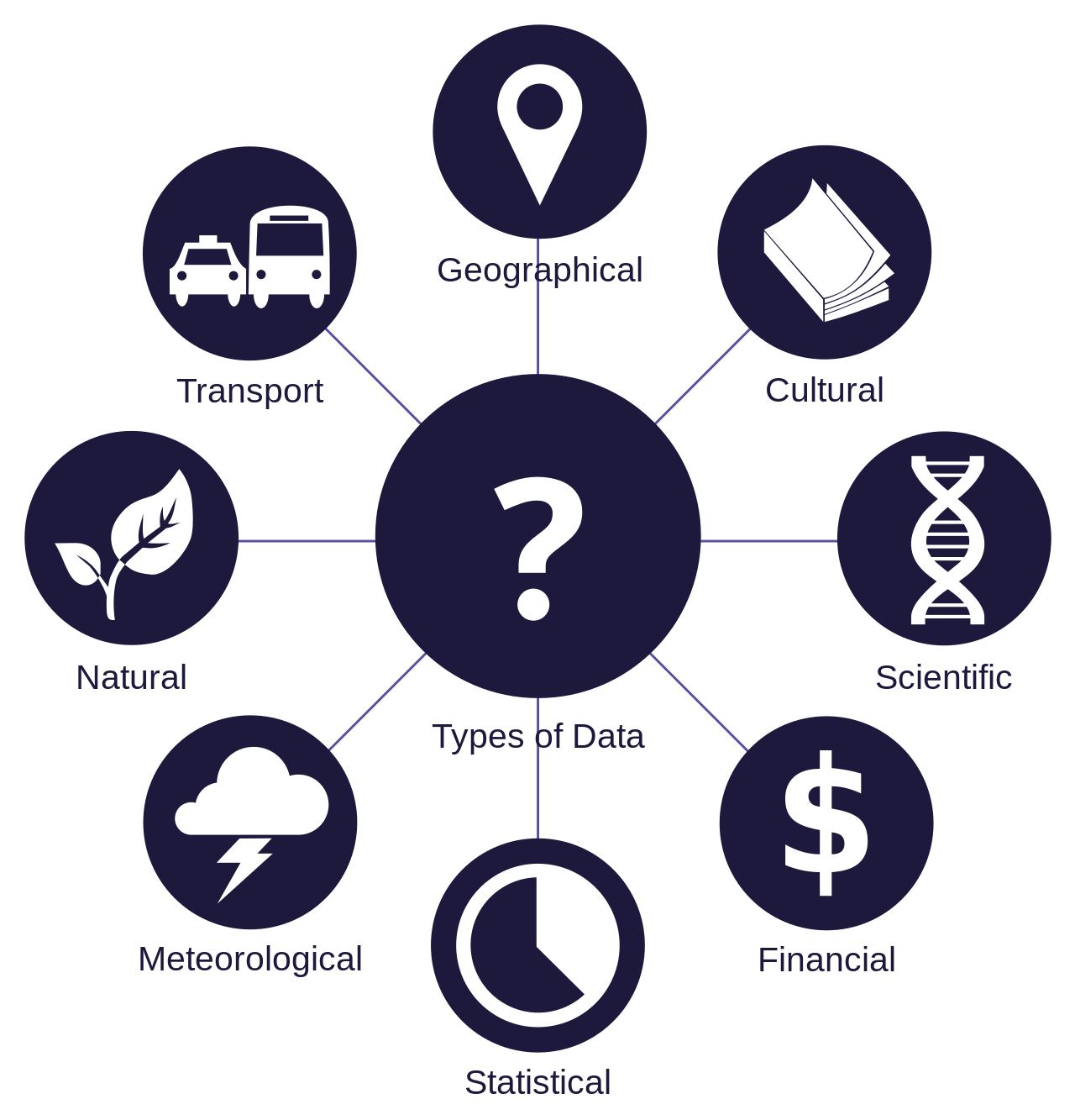
There are several types of data, including quantitative data, qualitative data, and categorical data. Quantitative data are numerical in nature, while qualitative data are descriptive and non-numerical. Categorical data, on the other hand, are used to group or categorize data into different categories. For instance, customer feedback is an example of qualitative data, while sales figures are an example of quantitative data.
What is the importance of data analysis?
Data analysis is critical in extracting insights and meaningful information from data. It enables organizations to make informed decisions, optimize operations, and drive business growth. The analysis of data also facilitates the identification of trends, patterns, and correlations, which can inform strategic decision-making. For example, the analysis of customer data can help businesses identify new marketing opportunities and improve customer satisfaction.
What are the challenges associated with data management?
The management of data is a complex task, requiring the effective storage, processing, and analysis of large volumes of data. The challenges associated with data management include data quality, data security, and data governance. Ensuring the accuracy, completeness, and consistency of data is essential for making informed decisions and driving business growth. Moreover, the protection of sensitive information, such as personal data, is critical in maintaining trust and preventing cyber threats.
What is the future of data?
The future of data is exciting and rapidly evolving. The emergence of new technologies, such as artificial intelligence and internet of things, is transforming the way we collect, analyze, and interpret data. The application of data science techniques in various fields, including healthcare and finance, is driving innovation and improving outcomes. Moreover, the use of cloud computing and edge computing is enabling the storage and processing of large volumes of data, facilitating the development of new applications and services.